Featured Movies - Page 210

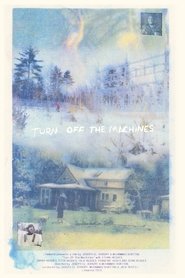
Turn Off The Machines
2026
Turn Off the Machines follows Ethan Hughes, a radical homesteader in mid-coast Maine who lives entirely without electricity, global supply chains, or modern technological comforts. Raised in Gloucester to working class parents, an early tragedy shattered a happy childhood and set him on a path of radical resistance. Living deliberately below the poverty line, Ethan's life is not a retreat but a protest against capitalism, war, and ecological collapse. The film explores his convictions, his family's daily rhythms, and the tensions that arise when belief meets the demands of life.Mohammed & Paul – Once Upon a Time in Tangier
2026
For filmmaker Nordin Lasfar, who grew up in the Netherlands as the child of Moroccan parents, author Paul Bowles opened the door to literature and stories from the land of his forebears. In the 1960s and 70s, Tangier was a base for Western artists and writers of the Beat Generation, among them Bowles.What a Guy Wants
2026
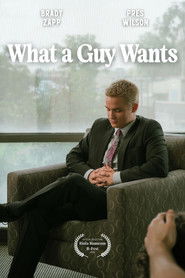
What a Guy Wants
2026
The CEO of a company that offers dating advice meets his match when a new client appears on the scene.An Afternoon in LA
2026
An Afternoon in LA
2026
Unboxing as a happening: three friends rummage through Uncle Joe’s belongings in Los Angeles. Amid yellowed postcards, medieval torture devices, gossip, and incense, Soli, Katy, and Sharon create an enjoyable bond between this life and the hereafter.Epp Maria. Painting Life
2026
Portrait of an artist Epp Maria Kokamägi. The film invites us into the world created by the artist on Sepamaa Farm, which is at once picturesque and fairytale-like, yet completely natural, where life, away from the hustle and bustle of the city, flows in the rhythm of nature.Mirai (The Abyss)
2026
Mirai (The Abyss)
2026
Mirai (The Abyss) draws on the world of Ghost of Tsushima to shape a brief, concentrated meditation on conscience under pressure. Beginning with a textual intervention, the film turns toward habituation, moral fatigue, and the threshold where violence stops appearing as rupture and sinks into the texture of experience. De Simone counters the game’s dramatic momentum with a quieter dissonance, redirecting attention to ethical aftertone, the residue produced when repetition dulls the force of response. Its restraint is what gives the work its edge. Mirai (The Abyss) follows the normalisation of the intolerable, showing how exposure reorders feeling before crisis fully declares itself.JTÉPARAKONTÉ
2026
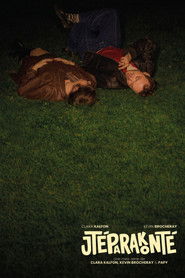
JTÉPARAKONTÉ
2026
SAM and RAPHAËL, two roommates on the brink of thirty, fill their lives solely with the few anecdotes they have to share with each other.Jahia’nın Yazı
2026
Jahia’nın Yazı
2026
Worship Him
2026
Cameron Esposito: Nine Months
2026
In an impromptu stand-up special recorded 48 hours before giving birth, comedian Cameron Esposito elaborates on life as a nonbinary pregnant person, the shady intricacies of donor screenings, and the bizarre reactions they've experienced from strangers.Tiny Gods
2026
Tiny Gods
2026
Life is a constant movement between the depths of our personal universe and the surface of the world. We dive within ourselves, emerge into everyday life. We oscillate from introspection to extroversion, from our microcosm to the real world. This pendulum is the story of the artist Kleio Gizeli, a pendulum that reaches from the secret space of an apartment to the visible world of a school classroom, from a penthouse in Kypseli, Athens to the life of its streets, from miniature works to the social work of education. This pendulum is the story of the film, the pendulum of a woman but also of all of us.We Have to Survive
2026
We Have to Survive
2026
A sweeping yet intimate journey across a planet in flux. Moving from the sinking shores of North Carolina’s Outer Banks to the windswept deserts of Mongolia, from the subterranean dwellings of Coober Pedy in Australia to the thawing coasts of Greenland, the film enters the “rooms” of our shared global home. In each place, lives unfold at the fault lines of change: a family planting trees against encroaching sand, communities building underground to escape relentless heat, fishers navigating uncertain waters.LO DE SIEMPRE...
2026
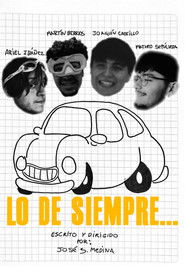
LO DE SIEMPRE...
2026
Babes in The Shed
2026
Babes in The Shed
2026
A pretentious filmmaker is faced with a hoard of fans that thirst for his blood.Рэп-нация
2026
Рэп-нация
2026
New cartoon by Maria Kobrinets, Alina Chistyakova and Yulia Koroleva (Institute of Business and Design).Курган
2026
Blog of the Eurotrip with isej: Warsaw, Krakow, Budapest, Vienna and Prague
2026
Blog of the Eurotrip with isej: Warsaw, Krakow, Budapest, Vienna and PragueVicky Wakes Up
2026
Vicky Wakes Up
2026
Stuck in a dead-end office job, Vicky lives an uninspired existence until she’s confronted by a mystical pop star.D Uncle - The Movie
2026
D Uncle - The Movie
2026
D. Uncle is going on a big musical adventure that teaches us about his morning routine, when an evil monkey steals all the colors from the world. D. Uncle goes on an adventure to fight the evil monkey to bring back the color to the world and save the entire humanity and his small animal farm so he can keep going on with his day and show us his daily routine.