Featured Movies - Page 170

Stella Maris
2026
Stella Maris
2026
Bobbi, a robot trained to build houses, enters the "real" world to fulfill his mission -- but when reality begins to glitch, he's forced to question everything he was taught as a long-buried dream resurfaces.Man on Loop
2026
Man on Loop
2026
16mm film performance. Caught in an endless loop of everyday repetition, a solitary man drifts through the crowd while quietly struggling between surrendering to the pattern and breaking free.A Tiny Memory
2026
A Tiny Memory
2026
The only memory Young-i has of her late grandfather is a small childhood mishap involving red bean ice cream. At his funeral, she remembers him in silence, overcome with grief, and eats that ice cream—which she only began to appreciate after his death.Relicto
2026
Relicto
2026
"At 105, Sixto Muñoz, known as 'the last Tinigua man', left his home for one final journey into the Amazon and disappeared. Following his trail along the Guayabero River, the film retraces his fading world and the extinction of an entire culture."Shareholders
2026
Squared Circles
2026
Squared Circles
2026
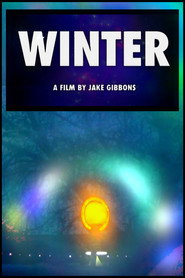
An aging professional wrestler, who was once a household name, is now clinging to his glory days as champion for a small company. Moments before his match, he's told to lose his championship to a young up-and-coming star who's coming to take his spot.Winter
2026
De Trut: 10 portretten
2026
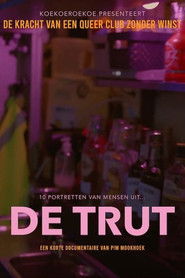
De Trut is a household name in Amsterdam; a queer party that has been organized here every Sunday evening for 40 years, 100% by volunteers. The profits are used to subsidize LGBTQ+ projects worldwide. On the occasion of the anniversary, filmmaker P!m Mookhoek was allowed to make recordings within the walls of De Trut for the first time and delved into the lives of ten people who work or have worked at De Trut, dance or are supported by the fund. This documentary reviews a varied collection of portraits and demonstrates what De Trut means to everyone.SE:E
2026
SE:E
2026
You Say That You’re Staying at the Party Because You’re Having Fun
2026
With a blank stare and a very clear facial expression, a young woman sits in a Danish courtroom listening to her own testimony. First, it is recited by a judge in Danish, and then it is translated into German by an interpreter so that she can understand it herself. In this way, her story returns to her twice, in two languages and two voices.Le Coeur Glorieux: Kill GG!, un an de rêve et de misère en Amérique
2026
A Movie about Jean-Louis Costes (4/5)Mary the Widow
2026
Mary the Widow
2026
An aging widow begrudgingly goes to a speed-dating event at her daughter’s request. Among a string of dud dates, one gentle stranger lingers in her mind. Mary the Widow is a tender look at love, memory, and the echoes of what we’ve lost.Azul
2026
Azul
2026
Deccal 3
2026
Deccal 3
2026
The Pencil
2026
The Pencil
2026
Four men enter a bidding contest for a pencil, and everything begins to spiral out of control.Cinema Lives – Arthouse Theatres in Germany
2026
After the last film played at the legendary Arsenal arthouse cinema in Tübingen, director Goggo Gensch accompanies founder Stefan Paul – filmmaker, distributor, and tireless cineast – on a journey to the screens that shaped Germany’s arthouse cinema movement. Paul and companions tell of the beginnings of arthouse cinemas in the 1970s and their daily struggle for survival. Icons like John Waters and Wim Wenders contribute personal memories, while the Hof International Film Festival celebrates underground films.Geneeskunst
2026
Geneeskunst
2026
Jusqu'à notre dernier souffle
2026
Atika, Karima, and Laetitia are fighting to obtain justice. These three women from Marseille have all lost a loved one in killings linked to organized crime. In the aftermath of these tragedies, they have each faced institutional and media-related violence. To obtain answers from the justice system and put an end to these tragedies, they are campaigning within the Collective of Victims’ Families.Aurora
2026
Aurora
2026
Sofia, November 7, 1952. A replica of the cruiser Aurora parades along the yellow cobbles – a revolutionary symbol reduced to spectacle. In the shadow of the celebrations, Maria, the daughter of an industrialist condemned by the People’s Court, survives as a prostitute in a decaying bourgeois hotel. Her lover is Axinia, an official sculptor of the regime who creates ideological monuments while living in fear.