Featured Movies - Page 269

movements to resist
2025
movements to resist
2025
Dance connects! Several generations dance for themselves and yet together. Each movement reveals its own attitude toward space, time, and internal and external barriers. The bodies and their gestures resonate with the sound and open up new approaches to silent acts of resistance, vitality, and becoming. A loving film miniature on 16mm, hand-developed, marked by traces and scratches from the analog process, revealing the fragility of the moment.Igitte Sisters
2025
Igitte Sisters
2025
Since the 1980s, twin sisters Yvonne and Susy Klos have been enriching the Munich punk scene with their electro-Dadaist performances. Their work is directed against right-wing ideologies, social brutalization, and the normalization of authoritarian thinking, and is satirical, radical, and anarchic. The film accompanies the twins for three days around the federal elections in February 2025—a moment when political alliances between the CDU and AfD provoke public outrage and protests across the country. A portrait of two artists whose view of the world is rebellious yet permeable to contradictions.If Life Gave Me a Wish
2025
In Granizo, a small town in central Cuba, Dianelis' days are prolonged by long waits. She lives between her loneliness and preparations for visits to the prison where her husband lives. She shares this fate with her friend. However, the reality they create together is far greater than what their meager existence can offer them.Water Is My Eye
2025
Was sieht Neumann aus dem Fenster?
2025
A Neumann calls other people named Neumann and, instead of playing a prank, asks them what they can see from their windows. New images emerge.Diagnose
2025
Diagnose
2025
What does homesickness taste like? In her found footage self-portrait, Jisu Kim outlines her search for the origin of sadness. No diagnosis strengthens the patient; rather, it is the question that does so: What helps when the diagnosis will never bring a cure?And My Love Will Live On
2025
From liveliness to rigidity—war scars the city and distorts the faces of its inhabitants until a sunflower becomes a symbol of hope. A digital, AI-assisted collage of scenes that oscillate between fear and resistance.Green Valley
2025
Green Valley
2025
A long-time resident of the farm, the filmmaker sets up a camera to observe this community living physically and ideologically on the margins of consumer society. In this multigenerational, interdependent community, each individual contributes in their own way to growing or raising almost all their food and, more broadly, to creating their own shared space and way of life. They seek to live in harmony with plants and animals, adopting an approach based on respect and recognition for their ecosystem. Images and sound express this vision, often placing humans in relation to their environment. The flexible frame also highlights manual labour with its sometimes delicate, sometimes laborious gestures. This visually stunning work was filmed over two years and follows the seasons. It’s punctuated by cycles—from sowing to harvesting and from birth to slaughter—developing an inspiring reflection on society, nature, and life through ellipsis and fluidity.Break Twice
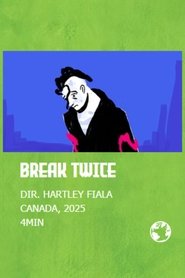
2025
Wishing Tree
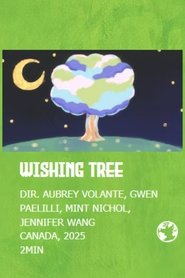
2025
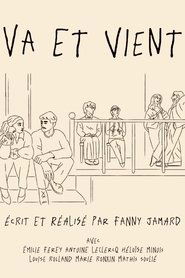
Va et vient
2025
Va et vient
2025
The Grass Grows
2025
The Grass Grows
2025
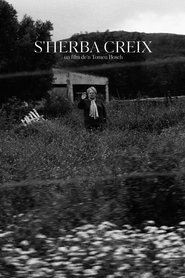
After his grandfather’s death, Toni Tomàs watches as life in the countryside and within his family begins to change. His grandmother, affected by grief, slowly starts to see the light again, while his father, with calmness and firmness, tries to restore order and ensure that the loss of the grandfather is not too deeply felt. Toni Tomàs reflects on his father and the way he faces the loss, in an effort to understand his family.Room 206
2025
Room 206
2025
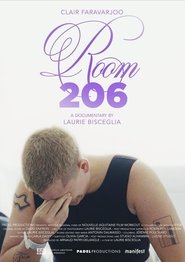
"Happy, happy, who cares." After undergoing the major surgery that is torsoplasty, he will no longer worry about what the world might think. Reclaiming his body, completely, is the only thing that matters. This documentary film follows Clair through his emotions: apprehension, euphoria, melancholy, gratitude—not at seeing his body change, but at recognizing himself. Finally. And for the first time in his life.Our Breath
2025
Our Breath
2025
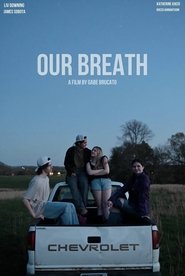
Set against the peaceful backdrop of a small county in rural Tennessee, Our Breath explores the intersecting lives of five friends: Benny, Leslie, Aubrey, Jack, and Casey.Paikar
2025
Paikar
2025
An Iranian expat journeys back to his homeland, where he must face his domineering father and grapple with complex emotions about family ties, cultural identity, and his place in the world.Blackout Dreams
2025
Blackout Dreams
2025
In Cuba, the nights are very dark indeed when there’s yet another power outage—but as much as possible, life goes on. People find their way around in the pitch dark, cyclists loom out of the blackness, children hang out on the streets by the light of flashlights. At the same time, the disruption appears to create intimacy: a priest takes the opportunity to open the Bible by candlelight and reads about the creation of light and darkness, an aged blind singer plays the guitar for his wife in their bedroom, a boy and his teacher play endless games of chess in the half-light, a fisherman heads calmly into the water with a lantern. Headlights from passing cars flash over houses shrouded in darkness, while the people inside sing and talk under the glow of portable lights.Under the Same Sky
2025
Under the Same Sky
2025
Behind you lies the sea; before you stands the enemy. This is the reality for the people of Gaza—and for Palestinian journalist Sami, who records it all with his 360° camera in the VR documentary Under the Same Sky. Driving along the Mediterranean coast in a press vehicle, he documents the war in the Gaza Strip. On one side are peaceful waters; on the other, heart-wrenching ruins.Blue Silence
2025
Blue Silence
2025
Off the coast of Manquemapu, Chile, buried beneath the indifferent waves, lies the wreck of the Janequeo. The ship capsized in 1965, and 51 people lost their lives. While the sea has swallowed the wreck, on land the memory of this disaster lives on—in the people and in the landscape.A Thousand Colors
2025
A Thousand Colors
2025
A filmmaker explores the intricate connections between race and identity at the core of her personal story.As I Lay Dying
2025
As I Lay Dying
2025
“There were so many of us, but when it all ended, each of us went our own way.” We see footage of the Green Movement, a wave of protests in Iran that began in the summer of 2009, in response to the presidential election fraud in favor of the incumbent president Mahmoud Ahmadinejad. We see the chaos, the solidarity among the people, and the amazement too: that this is possible, that this is actually happening. Shaky handheld images capture both the energy of the crowd and the panic when shots suddenly ring out. Meanwhile, a voice-over calmly recounts what happened to the people we see.